
Doors & frames · Brisbane
Door Repair & Installation Carpenter Brisbane
We repair timber doors that stick, drag, rub, sag or fail to latch, together with damaged jambs, frames and architraves in Brisbane. We first distinguish alignment and hardware faults from swollen or decayed timber, then repair suitable parts or replace the affected section. Rehanging, compatible hardware fitting and an agreed sealing or painting finish can be coordinated around the existing opening.
Common timber door problems
What is happening when the door opens or closes?
The door rubs against the frame or floor
The door will not close, shut, latch or stay closed
The door has sagged or dropped and the gaps are uneven
Hinges are loose, damaged or pulling away from the timber
The latch or strike plate no longer lines up
The timber door is split, cracked or locally damaged
The door frame or jamb is cracked, split or damaged
Timber at the bottom of the frame appears rotten
The timber is swollen, weather-damaged or water-affected
Architrave, door trim or a door stop is damaged
Repair instead of unnecessary replacement
Repair, partial replacement or a new door and frame?
The right option depends on the extent of rot or damage, whether the door is distorted, the condition of the frame and whether the hinges, latch and strike plate can still be fitted securely. Repair is not automatically better, and replacement is not automatically required.
Adjustment or local repair may be suitable
A sound door and frame with a limited hinge, latch, alignment, split or rubbing problem may suit adjustment, reinforcement or a localised timber repair.
A damaged section may need replacement
Localised damage to a jamb, architrave, door stop or the bottom of a frame may require the affected section to be removed and replaced when the surrounding timber remains sound.
Full replacement may be more practical
A severely warped door, widespread rot, an unsound frame, repeated movement or unresolved water entry can make replacement of the door, frame or both the better option.
Real door hardware fitting case
Smart-lock fitting to an existing timber door
These project photos show the existing timber chipped around the lock opening, followed by completed smart-lock hardware fitting on the retained door.
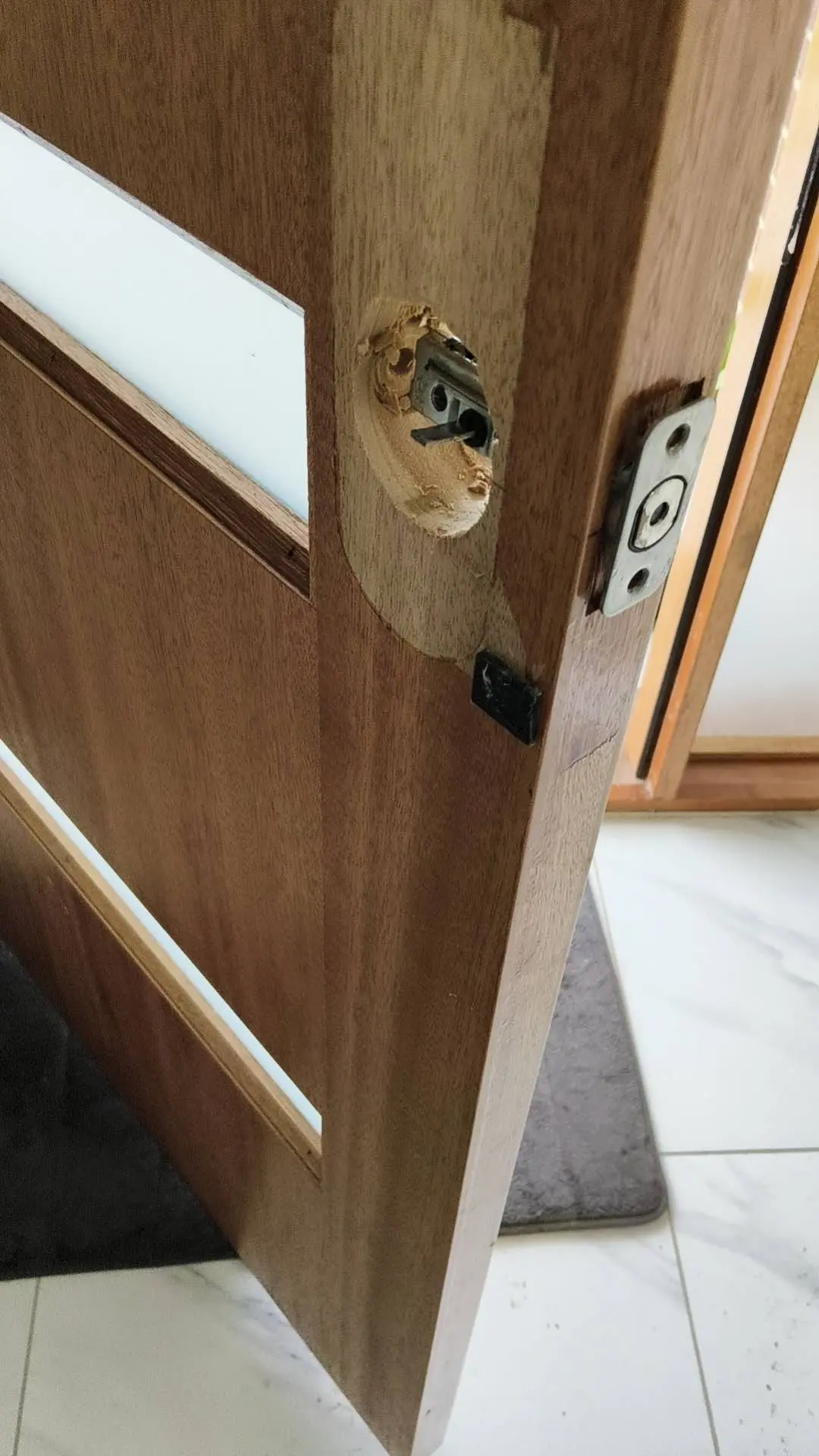 Before fitting
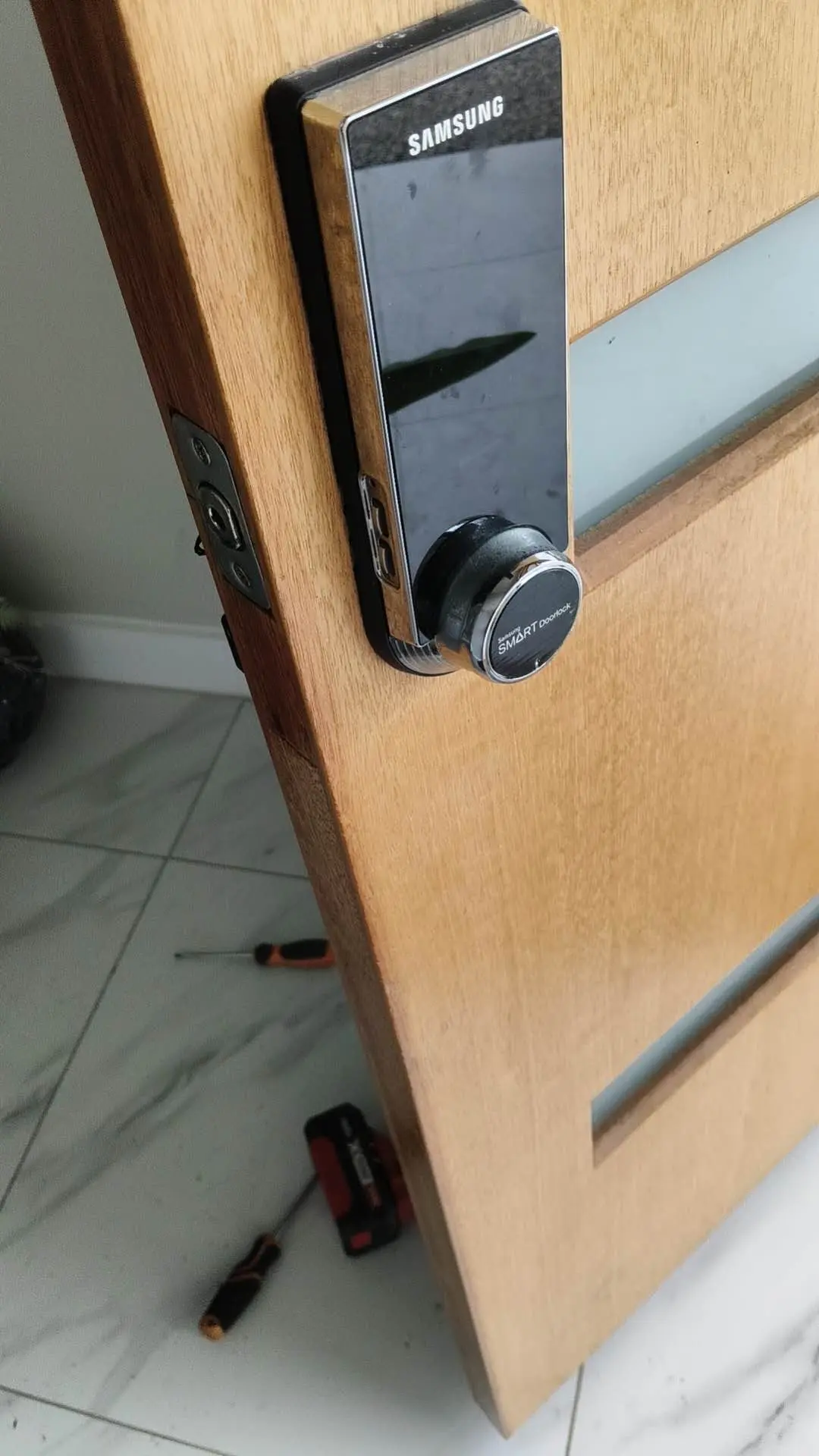 Completed fitting
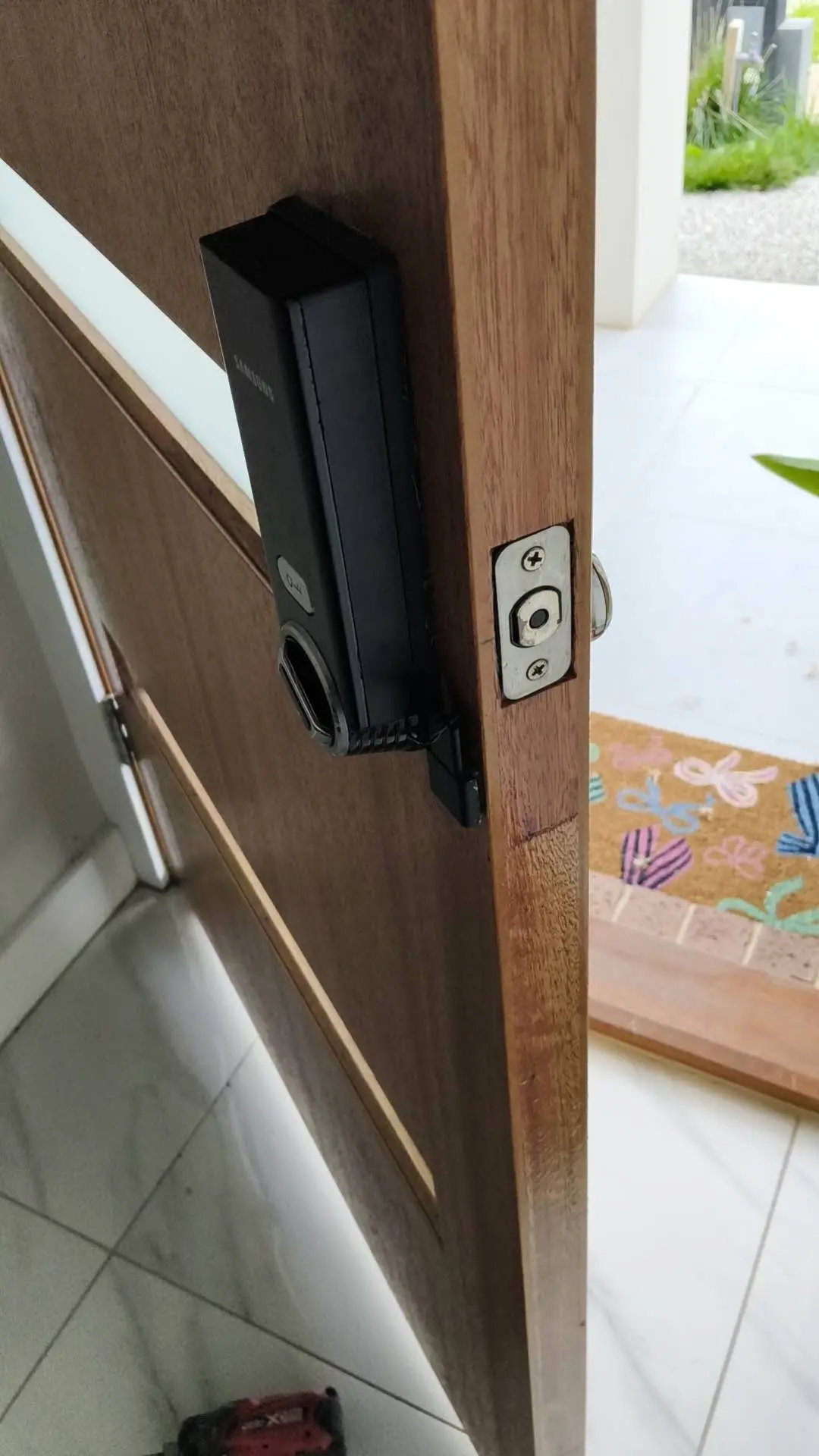 Completed fitting
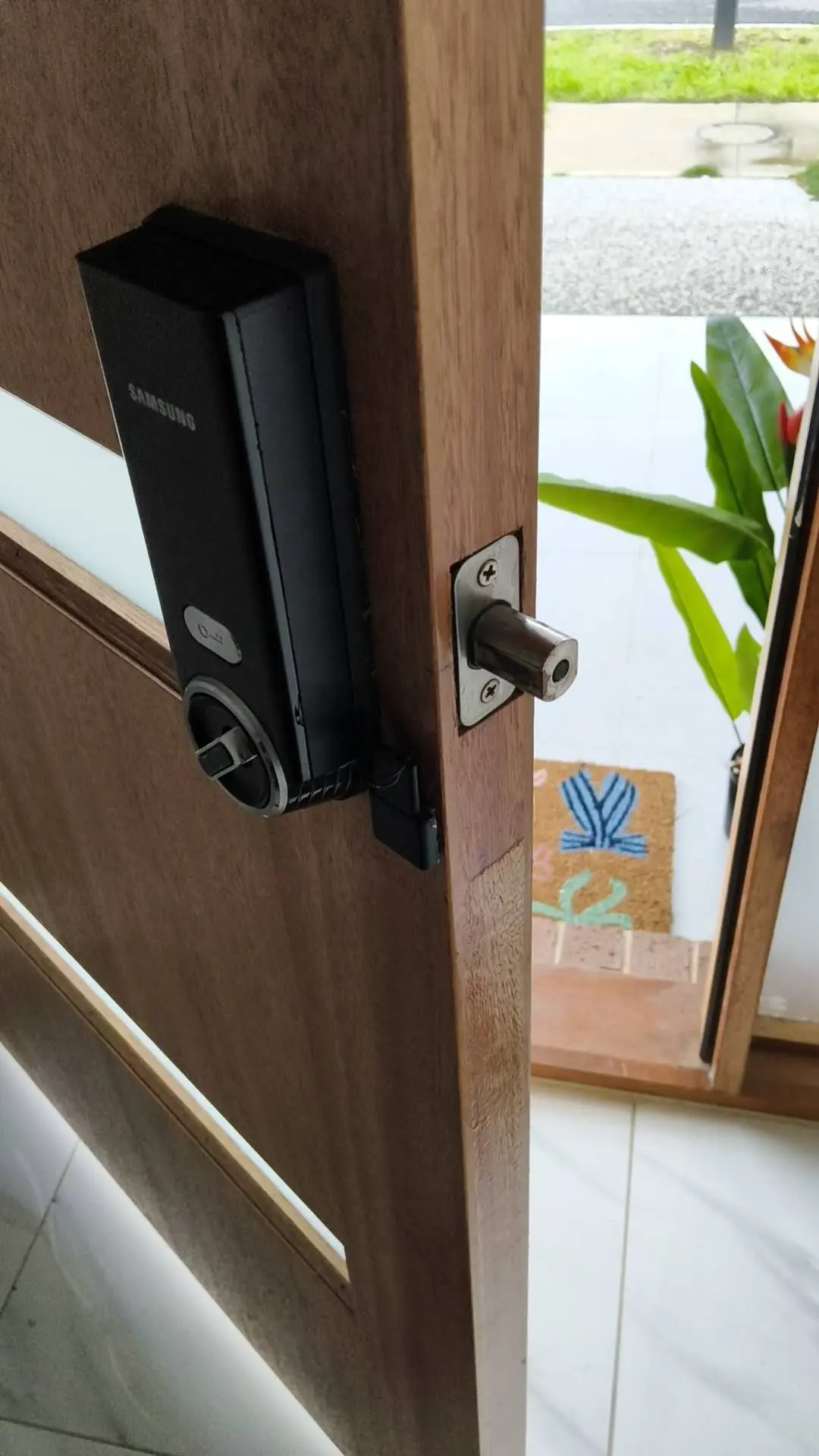 Completed fitting
Real project photography supplied by the business.View the door hardware fitting case
On-site door photo
White hinged door: on-site photo
A white hinged door with four horizontal glazed panels, a lever handle and a key cylinder. The surrounding white frame and tiled threshold are also visible.
For a door enquiry, send an overall photo plus close views of the hinges, handle, latch and frame. Describe what happens when the door opens or closes.
View the white hinged-door site photo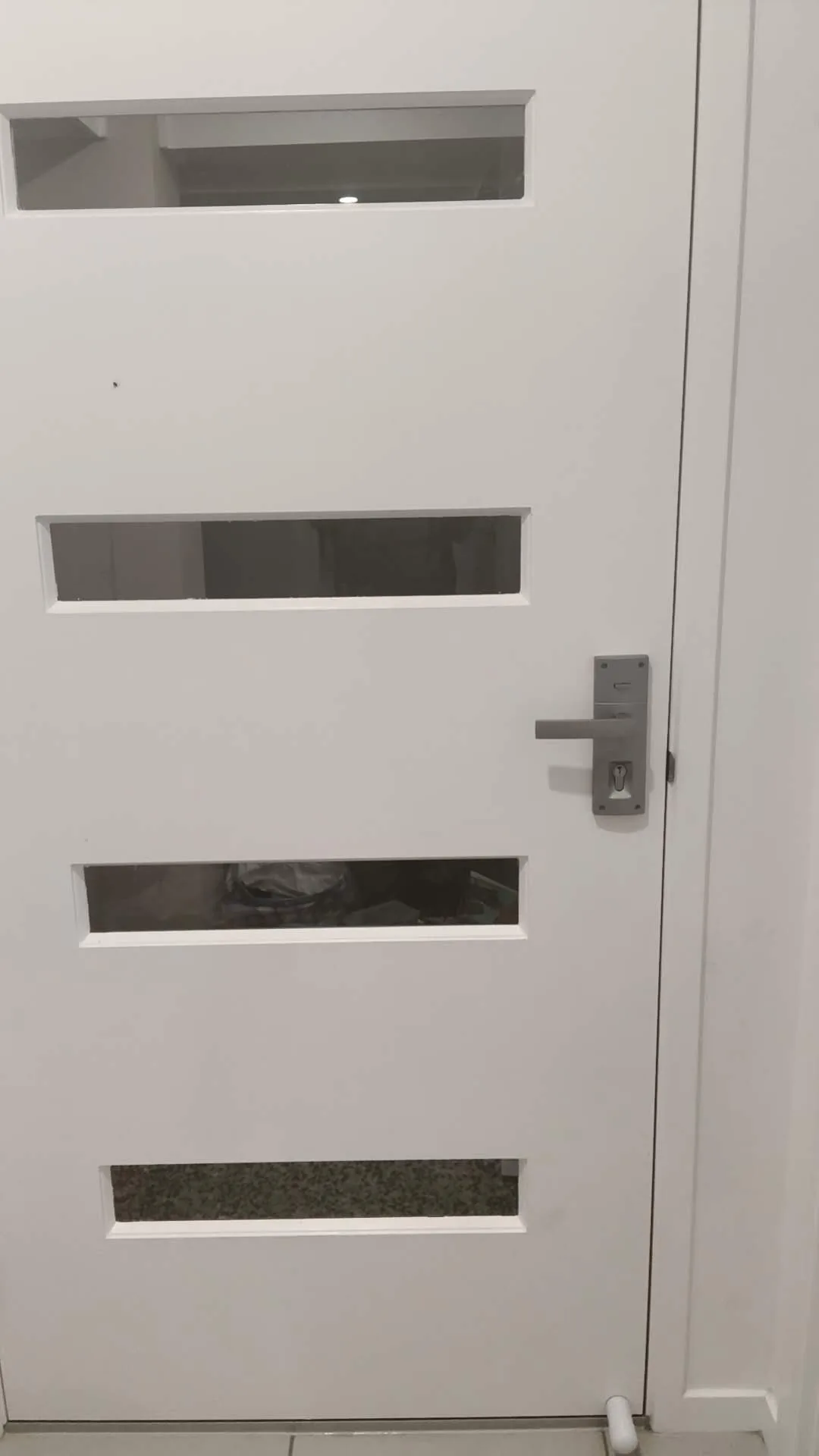
TIMBER DOOR DETAILS
Weathered timber door: paint and hardware details
The site photos show worn paint on a timber door, stainless pull handles and a round lock. For similar wear, send an overall door photo, close-ups of the paint and hardware, and a description of how the door opens and closes.
View the door and walkway photos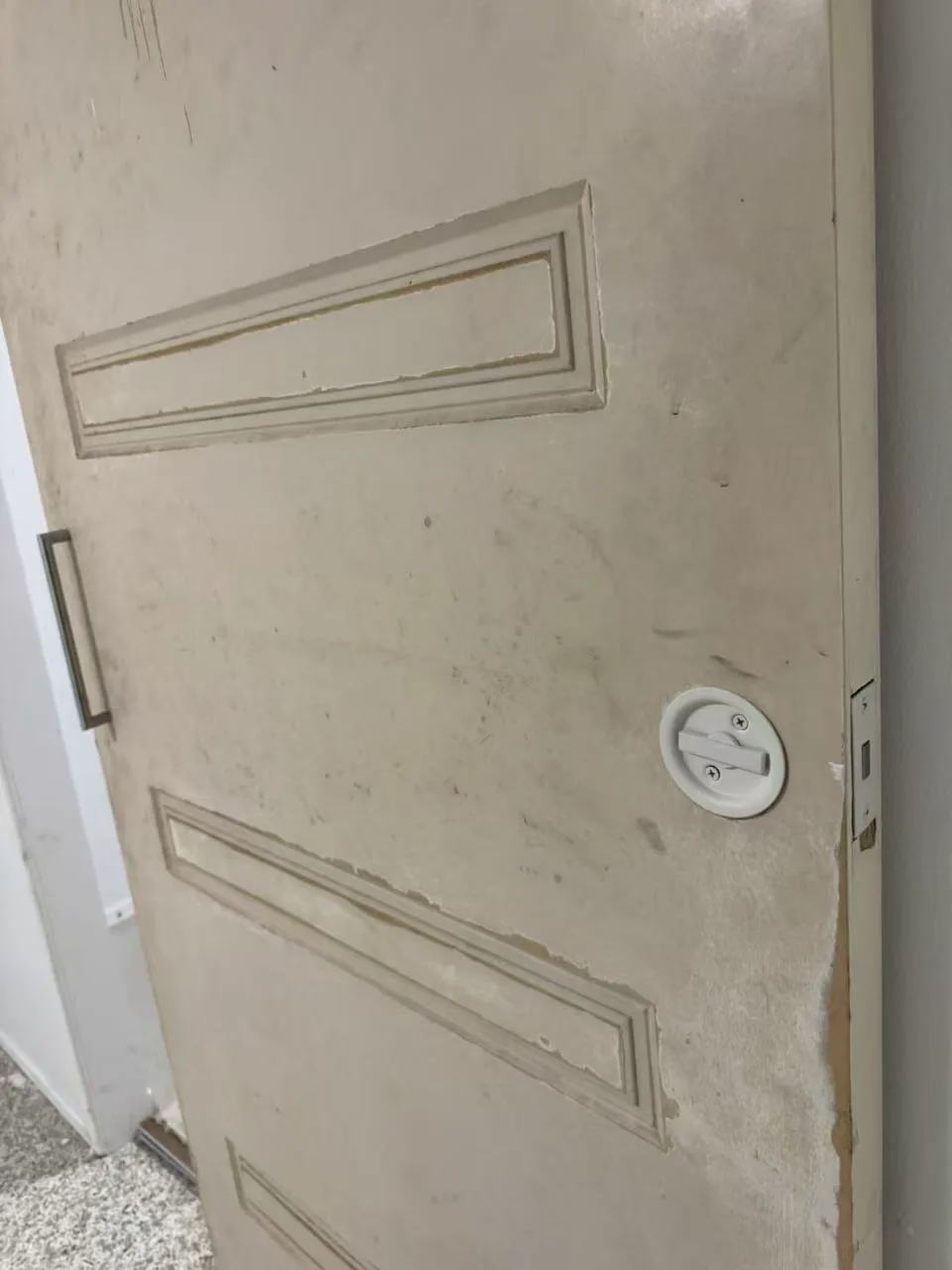
Right service for the job
Send door and frame carpentry enquiries here
Use this page for standalone timber and wooden door problems, including sticking, dragging, sagging, closing or latching faults, plus jamb, frame, architrave and localised timber repairs. Compatible hardware fitting can be assessed when it forms part of the carpentry scope.
Repair, replace or inspect?
Repair the door or replace it?
Adjustment or a local timber repair may suit a sound door and frame with a limited alignment, hardware or damaged-section problem. Localised jamb or frame damage may call for partial replacement. Severe distortion, widespread rot, an unsound frame or unresolved water entry can make full door or frame replacement more practical. The decision depends on the extent of decay, door shape, frame condition and hardware, so not every door can be repaired.
Repair, preparation and finish
How we repair and refit a timber door
- 1
Find the part causing the fault
We check the door leaf, hinge support, frame gaps, latch position and floor clearance together. A door rubbing after new flooring needs a different repair from a split jamb or a swollen bottom rail.
- 2
Keep sound timber; replace failed sections
A sound door may need rehanging, hardware adjustment or a local frame repair. Widespread rot, distortion or fixing points that cannot hold the door favour replacing the affected component. We address recurring moisture rather than simply trimming the same edge again.
- 3
Protect the opening before fitting
We protect adjoining flooring and finishes, allow for safe door removal and retain usable fittings. The door construction and manufacturer’s trimming limits are checked before any edge is altered; there is no universal cutting allowance.
- 4
Repair or replace the door components
For a repairable local split in sound timber, the work can use a compatible adhesive and clamping for that system before filling and sanding minor surface defects. Failed hinge support or extensive decay can need a replacement section. For a plain internal-door replacement we check the opening, hinges, handle and latch, then fit the suitable new leaf and hardware. Glazed timber doors also need the glass and adjoining joints protected.
- 5
Finish the repaired edges
Where sealing or painting is included, exposed repair areas are prepared and finished with a system compatible with the door and retained coating. Filler covers suitable minor surface defects; it does not replace sound hinge support or missing structural timber.
- 6
Check travel, gaps and latching
We check normal opening and closing, clearance and latch engagement after adjustment or fitting. The handover identifies the parts repaired or replaced, any remaining frame movement and finishing still to be completed.
Doors & frames FAQ
Questions about timber doors, frames and alignment
These answers explain repair options, quote information and the service boundary before you enquire.
Can a carpenter repair a door that will not close?
Often, depending on the cause and condition. A dropped hinge, movement in the frame, swelling, uneven gaps, latch alignment or damaged timber can stop a door closing. The door and opening need to be assessed before the repair method is confirmed.
Can you repair a rotten timber door frame?
A localised rotten section may be repairable or replaceable when the remaining frame is sound. Widespread decay, movement or ongoing moisture can require a larger section or the full frame to be replaced, and the moisture source should also be addressed.
Why is my timber door sticking or rubbing?
Common causes include swelling, loose hinges, movement in the frame, paint build-up and changed floor clearance. If a door rubs after new carpet or flooring, first check the hinge support, gaps and floor build-up rather than assuming the bottom should be cut. Trimming may suit a sound, suitable door, but hollow-core construction and each product’s permitted trimming allowance need checking with its manufacturer. If the necessary clearance exceeds that allowance, compare adjustment, floor clearance and a correctly sized replacement; there is no universal amount that is safe to cut from every door.
Can a split door jamb be repaired?
Some localised splits around a hinge, latch or strike plate can be repaired or reinforced when the surrounding timber is sound. A badly fractured, rotten or moving jamb may need partial or full replacement.
Is it better to repair or replace a damaged door?
That depends on the location and extent of damage, whether the door is warped, the condition of the frame and hardware, and whether matching timber is available. A sound door with a local problem may suit repair; extensive distortion, decay or repeated failure can favour replacement.
Do you repair internal and external timber doors?
We repair and fit suitable internal and external hinged timber doors, including front, back, bedroom, bathroom, laundry, French and double doors. We assess the construction, exposure and condition before confirming the work.
Can you adjust hinges, latches and strike plates?
Yes, within timber door and frame alignment or repair. If hinge screws keep loosening, we assess the fixing material, split or worn timber, hinge condition, door weight and movement in the opening; longer screws alone are not a complete diagnosis. Sound surrounding timber may suit refixing or reinforcement, while damaged timber may need a local section repair. Agree an operation check after the work: the door should open and close through its normal travel, with the agreed floor clearance and latch engagement, and any remaining movement or finishing work identified. Pure locksmith, rekeying and lockout work is outside this carpentry service.
What should I send for a door repair quote?
Send your Brisbane suburb, a short description of what happens when the door opens or closes, full-door photos from both sides, close-ups of the damage, hinges and latch, the gaps around the frame, approximate measurements and any access or finishing requirements.
What should I clarify about the door, frame, hardware and painting in a door-installation quote?
Tell us what is wrong with the door and whether you already have a replacement. We check the opening, swing, hinges, thickness and hardware positions, then explain what can be retained and whether a supplied door fits within its construction and manufacturer limits. If it is unsuitable, we compare a correctly sized door with agreed frame or hardware changes before further cutting or purchase. Our written scope separates carpentry, replacement timber and fittings, sealing or painting, removal and waste, and any follow-up trade; each is included only where specified.
Can you fit compatible hardware to an existing timber door?
We fit selected compatible hardware as part of the carpentry scope. Tell us what you need or what you have already bought; we check the door, opening, existing holes and product fit. Locksmith work and emergency lockouts remain separate services.
Do you repair garage, glass or automatic doors?
No. This page is for residential timber and wooden door, frame, jamb, trim and related alignment or hardware-fitting carpentry. Garage and roller doors, automatic or industrial doors, aluminium sliding-door mechanisms, glazing or broken glass, security and flyscreen doors, shower doors, car doors, fire-door certification or compliance work, and locksmith services such as emergency lockouts, rekeying and key cutting need the relevant specialist. Cabinet doors and wardrobe sliding mechanisms belong to separate joinery or wardrobe service scopes.
Ready to check the job?
Send the suburb, photos and result you want
Tell us whether the door sticks, drags, sags, rubs or will not close, and include photos of the door, gaps, hinges, latch and damaged timber.